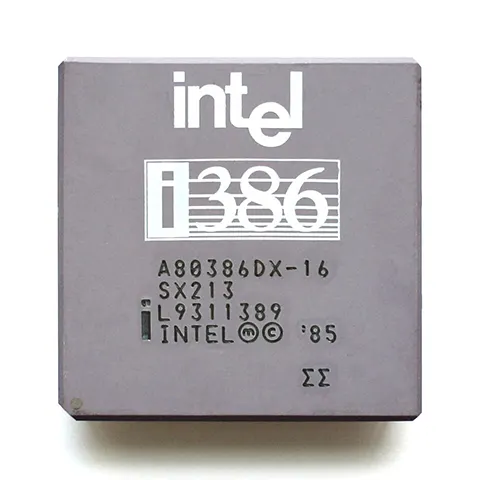
The Intel 80386: A Revolutionary Step in PC History

The Intel 80386 (often shortened to i386) was a 32-bit microprocessor released in 1985. It was a huge leap forward from its predecessors, the 8086 and 80286, and fundamentally changed the landscape of personal computing. Here’s a detailed look at its history, architecture, features, and impact: 1. Historical Context & Development Following the 80286: The … “The Intel 80386: A Revolutionary Step in PC History” [More]

Starlink: A Deep Dive into SpaceX’s Satellite Internet

Starlink is a satellite internet constellation being constructed by SpaceX, aiming to provide high-speed, low-latency broadband internet globally, especially to areas where traditional internet infrastructure is unreliable, unavailable, or expensive. Here’s a comprehensive overview, broken down into sections: 1. What is Starlink? Satellite-Based Internet: Unlike traditional internet that relies on fiber optic cables and cellular … “Starlink: A Deep Dive into SpaceX’s Satellite Internet” [More]

PyTorch: A Deep Dive

PyTorch is a popular open-source machine learning framework based on the Torch library, used for applications such as computer vision and natural language processing. Here’s a comprehensive overview, covering its key features, strengths, weaknesses, use cases, and how it compares to other frameworks: 1. Core Concepts & Features Dynamic Computational Graph: This is arguably PyTorch’s … “PyTorch: A Deep Dive” [More]

TensorFlow: A Deep Dive

TensorFlow is a powerful open-source software library for numerical computation and large-scale machine learning. Developed by the Google Brain team, it’s become a cornerstone of the AI landscape, used in everything from research to production deployments. Here’s a comprehensive overview, covering its core concepts, features, uses, and current state: 1. Core Concepts Tensors: The fundamental … “TensorFlow: A Deep Dive” [More]

OpenCL: A Deep Dive into Open Computing Language

OpenCL (Open Computing Language) is a framework for writing programs that execute across heterogeneous platforms. This means it allows you to use the power of CPUs, GPUs, DSPs, FPGAs, and other processors in parallel to accelerate computationally intensive tasks. Here’s a comprehensive overview, covering its history, architecture, uses, advantages, disadvantages, and future: 1. History & … “OpenCL: A Deep Dive into Open Computing Language” [More]

Dell Latitude: A Comprehensive Overview

The Dell Latitude series is a long-standing line of business-focused laptops known for their durability, reliability, and security features. Here’s a detailed breakdown, covering history, key features, current models, who they’re for, and things to consider: 1. History & Evolution Early Days (1994): The Latitude line debuted as a robust, portable alternative to desktop computers … “Dell Latitude: A Comprehensive Overview” [More]

The Intel 8086: A Deep Dive into a Landmark Microprocessor

The Intel 8086 is a 16-bit microprocessor released in 1978, and it’s a hugely significant chip in the history of computing. It’s the ancestor of the x86 architecture that still powers most desktop and laptop computers today. Here’s a comprehensive overview, covering its architecture, features, significance, and legacy: 1. Historical Context & Why it Mattered … “The Intel 8086: A Deep Dive into a Landmark Microprocessor” [More]

Supercomputers: A Deep Dive

Supercomputers are at the pinnacle of computing power. They’re not just faster versions of your desktop PC; they represent a fundamentally different approach to processing information, tackling problems that are impossible for regular computers to solve in a reasonable timeframe. Here’s a comprehensive overview, covering their history, architecture, uses, current leaders, and future trends: 1. … “Supercomputers: A Deep Dive” [More]

Microsoft Certifications: A Comprehensive Overview

Microsoft Certifications are industry-recognized credentials that validate your skills and expertise in Microsoft technologies. They’re valuable for career advancement, demonstrating competence to employers, and staying current in the rapidly evolving tech landscape. Here’s a breakdown, covering everything from why they matter to the current certification landscape: 1. Why Get Microsoft Certified? Career Advancement: Certifications can … “Microsoft Certifications: A Comprehensive Overview” [More]

MS-DOS: A Deep Dive into the Classic OS

MS-DOS (Microsoft Disk Operating System) was a pivotal operating system in the history of personal computing, particularly in the IBM PC compatible market. It was the dominant operating system for PCs from the early 1980s until the mid-1990s when graphical user interfaces (GUIs) like Microsoft Windows began to fully take over. Here’s a breakdown of … “MS-DOS: A Deep Dive into the Classic OS” [More]