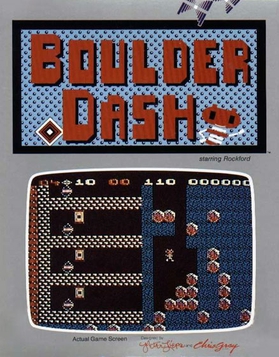
Boulder Dash: A Classic Digging Adventure – A Deep Dive
Boulder Dash is a classic action puzzle video game, originally created by Peter Liepa and released in 1984. It’s a game that’s seen numerous iterations, ports, and inspired countless clones, and remains beloved by many for its unique gameplay and challenging puzzles. Here’s a comprehensive look at Boulder Dash, covering its history, gameplay, variations, and legacy:
Core Gameplay
The core concept of Boulder Dash is deceptively simple: you control a diamond-mining adventurer (often called Rockford) who must collect enough diamonds to open an exit and escape a cave before time runs out or the cave collapses. However, the caves are filled with obstacles and dangers that make this task far from easy.
- Digging: You dig through the earth (dirt, rock, etc.) to create paths and uncover diamonds. You can dig in all four cardinal directions (up, down, left, right).
- Diamonds: Collecting diamonds is the primary goal. You need a specific number to activate the exit.
- Rocks & Boulders: The game’s namesake! Rocks and boulders are the biggest threat. They fall downwards when the earth beneath them is removed. Getting crushed by a falling rock is instant death. Strategic digging is crucial to avoid triggering landslides.
- Enemies: Caves are populated with various enemies, each with unique behaviors:
- Butterflies/Fliers: Float around and kill you on contact.
- Snakes: Move horizontally along the ground and kill you on contact.
- Amoebas: Split into multiple smaller amoebas when disturbed, making them difficult to avoid.
- Fireflies: Move erratically and kill you on contact.
- Monsters: Larger, more persistent enemies that chase you.
- Power-Ups: Scattered throughout the caves are power-ups that provide temporary advantages:
- Rockford (Extra Life): Gives you an extra life.
- Time Extension: Adds more time to the clock.
- Magic Wand: Temporarily destroys all enemies on the screen.
- Super Dig: Allows you to dig through rock walls.
- Key: Needed to unlock certain exits.
- Gloves: Allow you to touch butterflies/fireflies without dying.
- Cave-Ins: Removing too much support from the cave structure can cause a cave-in, burying you alive.
History & Versions
- Original (1984): Developed by Peter Liepa for the Apple II. This version established the core gameplay mechanics.
- Atari Ports (1985): Popular ports were released for the Atari 8-bit family and Atari 2600. The Atari 2600 version, while popular, was significantly different and more limited due to the hardware constraints.
- Commodore 64 (1986): A well-regarded port that stayed relatively faithful to the original.
- NES/Famicom (1987): A popular version with enhanced graphics and sound, and a larger number of levels. Often considered a definitive version by many.
- Game Boy (1990): A portable version that maintained the core gameplay.
- Boulder Dash Universe (2019): A modern reimagining with 3D graphics, level editor, and online features.
- Numerous Clones: The success of Boulder Dash spawned a plethora of clones, including Dig Dug (which shares some similarities but has a different focus), Fantastic Adventures of Dizzy, and many others.
Key Differences Between Versions
While the core gameplay remains consistent, different versions of Boulder Dash often feature:
- Graphics: Significant variations in visual style, from the pixelated look of the original to the more detailed graphics of the NES version.
- Sound: Different soundtracks and sound effects.
- Level Design: The number and complexity of levels vary greatly. Some versions have more challenging and intricate cave designs.
- Enemies: Some versions introduce new enemy types or modify the behavior of existing ones.
- Power-Ups: The availability and effects of power-ups can differ.
- Physics: Subtle differences in the physics engine can affect how rocks fall and how the character moves.
Why Boulder Dash is Still Loved
- Unique Gameplay: The combination of digging, puzzle-solving, and action is unique and engaging.
- Strategic Depth: It’s not just about digging; it’s about planning your route, anticipating rockfalls, and managing enemies.
- Challenging Puzzles: The levels are cleverly designed and require careful thought and execution.
- Addictive Nature: The “just one more level” feeling is strong.
- Nostalgia: For many, Boulder Dash evokes fond memories of the 8-bit era.
- Simple to Learn, Difficult to Master: The basic mechanics are easy to grasp, but becoming a skilled Boulder Dash player requires practice and strategy.
Where to Play Today
- Emulation: You can play many versions of Boulder Dash through emulators on your computer or mobile device.
- Boulder Dash Universe: Available on Steam and other platforms.
- Online Versions: Several browser-based versions are available.
- Retro Gaming Consoles: If you have access to original hardware, you can play the classic versions on their respective consoles.
In conclusion, Boulder Dash is a timeless classic that continues to captivate players with its unique blend of action, puzzle-solving, and strategic thinking. Its enduring appeal is a testament to its clever design and addictive gameplay.
You can find more information at these resources:
- Wikipedia: https://en.wikipedia.org/wiki/Boulder_Dash
- MobyGames: https://mobygames.com/game/boulder-dash
- Boulder Dash Website: https://boulder-dash.com/
Is there anything specific about Boulder Dash you’d like to know more about? Perhaps you’re interested in a particular version, a specific enemy, or strategies for playing the game? Just let me know!