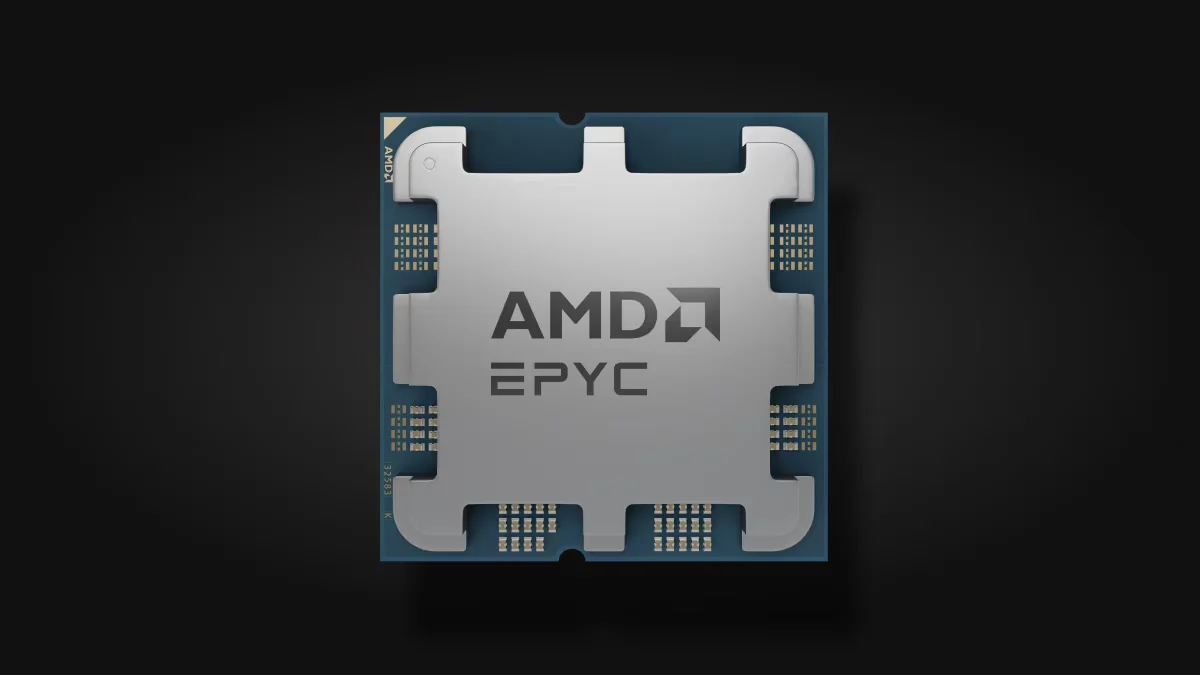
AMD EPYC is a series of x86-64 microprocessors designed specifically for data centers, cloud computing, and high-performance computing (HPC). Since its debut in 2017, it has disrupted the server market, which was previously dominated by Intel’s Xeon processors.
Here is a breakdown of what makes AMD EPYC significant and how the technology works.
1. The Core Innovation: Chiplets
The biggest reason for AMD’s success with EPYC is its chiplet-based architecture.
- The Problem: Traditional processors are “monolithic” (one giant piece of silicon). As cores get more numerous, these chips become very expensive to manufacture and prone to defects.
- The Solution: AMD uses a “multi-chip module” design. They use a central I/O Die (IOD) connected to multiple Core Complex Dies (CCDs).
- The Result: It is much cheaper to manufacture and combine smaller, perfect dies than to try and produce one massive, error-prone chip. This allowed AMD to rapidly increase core counts (up to 128 cores today) while keeping costs manageable.
2. Key Generations
- Naples (1st Gen): AMD’s re-entry into the server market. It introduced high core counts (up to 32) and 8-channel memory support.
- Rome (2nd Gen): The “Zen 2” architecture. It was a massive leap, introducing 64 cores and 128 threads per socket and moving to 7nm manufacturing.
- Milan (3rd Gen): Refinements to Zen 3, focusing on higher Instructions Per Clock (IPC) performance, which made them incredibly fast for enterprise workloads.
- Genoa / Bergamo (4th Gen): Built on “Zen 4.” These introduced support for DDR5 memory, PCIe Gen 5, and up to 128 cores (Bergamo) optimized for cloud-native workloads.
- Turin (5th Gen – Current): Built on “Zen 5,” these offer up to 192 cores in a single socket, focusing on extreme density and AI-ready performance.
3. Why Data Centers Prefer EPYC
- Core Density: EPYC processors generally offer more cores per socket than competitors, allowing companies to consolidate many physical servers into fewer, more powerful ones.
- Memory & I/O: EPYC was the first to offer 128 PCIe lanes, allowing for significantly better connectivity for NVMe storage, high-speed networking, and multiple GPUs per CPU.
- Power Efficiency: Because of the chiplet design and advanced manufacturing (TSMC nodes), EPYC processors often deliver more performance per watt, which is the most critical metric for data center operators trying to lower electricity bills.
- Security (AMD Infinity Guard): EPYC features hardware-level security, including Secure Memory Encryption (SME) and Secure Encrypted Virtualization (SEV), which protects data even if a virtual machine is compromised.
4. Market Impact
Before EPYC, Intel held a near-monopoly on the server market. AMD’s EPYC forced the market to innovate faster, leading to:
- Lower Prices: Increased competition lowered the cost per core for cloud providers (AWS, Azure, Google Cloud).
- Faster Progression: Intel was forced to shift away from its older architectures to compete with AMD’s core-dense designs.
- HPC Domination: EPYC processors now power some of the world’s fastest supercomputers, including Frontier (the first exascale supercomputer), which uses AMD EPYC CPUs and AMD Instinct GPUs.
5. Summary Comparison
| Feature | AMD EPYC | Intel Xeon (Scalable) |
|---|---|---|
| Architecture | Chiplet (MCM) | Primarily Monolithic (moving to tiles) |
| Max Cores | 192 (Turin) | 128 (Sierra Forest) |
| I/O Capacity | Historically very high (128 PCIe lanes) | Traditionally lower, now competitive |
| Best For | Massive multi-threading, density, cloud | General purpose, specific AI/vector workloads |
Who is EPYC for?
- Cloud Service Providers: Companies like AWS/Azure use them to host thousands of virtual machines on a single server rack.
- Enterprise IT: Large companies running databases, virtualization, and heavy ERP software.
- Researchers/Scientists: Institutions performing simulations, weather modeling, or AI training that require massive parallel processing power.
Are you looking at EPYC for a specific use case, such as building a server or choosing a cloud instance? I can provide more technical advice based on your needs.