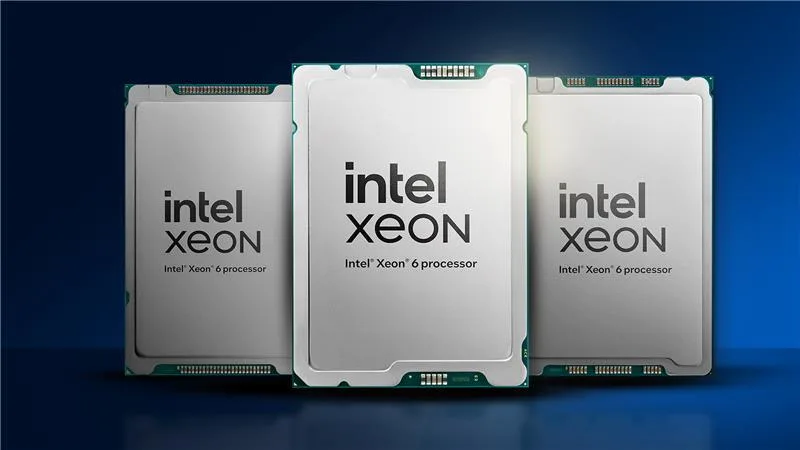
Intel Xeon is a brand of x86 microprocessors designed by Intel specifically for server, workstation, and embedded system markets.
While consumer-grade Intel Core processors (i3, i5, i7, i9) are built for everyday computing, gaming, and creative work, the Xeon line is engineered for reliability, scalability, and 24/7 high-performance computing.
Here is a breakdown of what makes Intel Xeon processors distinct:
1. Key Technical Features
- Support for ECC Memory: Xeon processors support Error Correction Code (ECC) RAM. This memory can detect and fix data corruption (bit flips) on the fly, which is critical for servers that cannot afford to crash.
- Massive Core/Thread Counts: While consumer CPUs generally max out at 16–24 cores, modern Xeon processors (like the Sapphire Rapids/Scalable series) can feature up to 60+ cores per single CPU.
- Large L3 Cache: Xeon CPUs have much larger caches compared to desktop CPUs, which helps the processor handle massive, complex datasets common in scientific modeling or server-side databases.
- Multi-Socket Support: Unlike Core processors, which are designed for single-socket motherboards, many Xeon lines support “multi-socket” configurations, allowing you to put 2, 4, or even 8 physical CPUs into a single motherboard.
- PCIe Lane Density: Xeon processors offer a significantly higher number of PCIe lanes. This allows for multiple high-speed devices (like 4–8 GPUs, enterprise NVMe drives, or high-bandwidth networking cards) to communicate with the CPU simultaneously without bottlenecks.
2. Market Segments
Intel categorizes its Xeon processors into tiers based on their use cases:
- Xeon Scalable (Bronze, Silver, Gold, Platinum): The flagship line designed for data centers, cloud computing, and AI workloads. These are built for high-demand, mission-critical environments.
- Xeon W-Series (Workstation): Designed for professionals in fields like 3D rendering, video editing, CAD, and data science. These focus on high clock speeds and reliability rather than sheer cloud-server density.
- Xeon D-Series: System-on-a-chip (SoC) processors designed for edge computing and networking where space and power are constrained but high performance is still required.
3. Xeon vs. Intel Core (When should you choose which?)
| Feature | Intel Core (i9/i7) | Intel Xeon |
|---|---|---|
| Primary Use | Gaming, Home/Office | Servers, AI, Rendering, Data Centers |
| RAM | Standard DDR4/DDR5 | ECC Memory (Required for stability) |
| Longevity | Designed for 3–5 year cycle | Designed for 24/7, multi-year uptime |
| Graphics | Usually has Integrated GPU | Almost never has Integrated GPU |
| Cost | More affordable | Expensive |
4. Why use a Xeon today?
You would choose a Xeon processor if:
- You are running a server: If your computer is acting as a host for websites, databases, or virtual machines, you need the stability of Xeon.
- You need mission-critical reliability: If a crash results in massive financial loss or data corruption, the ECC support and error-checking in Xeon are mandatory.
- You need massive I/O: If you are building a workstation that requires multiple high-end GPUs for machine learning or heavy 3D rendering.
- You need “More of Everything”: When a standard desktop CPU simply doesn’t have enough PCIe lanes or RAM capacity (Xeons can support terabytes of RAM).
5. Current Trends
- AI Integration: Modern Xeon Scalable processors include Intel AMX (Advanced Matrix Extensions), which are hardware accelerators specifically designed to speed up AI inference and training tasks.
- Competition: Xeon faces intense competition from AMD EPYC processors, which have gained significant market share in the data center industry by offering higher core counts and better power efficiency in many scenarios.
- Cloud Computing: Most of the infrastructure running AWS, Google Cloud, and Azure is built upon generations of Xeon processors, making them the “backbone” of the internet.
In summary: If you are a typical user or gamer, an Intel Core processor is better and more cost-effective. If you are building a server, a heavy-duty workstation, or a system for enterprise-level data processing, Intel Xeon is the industry standard.