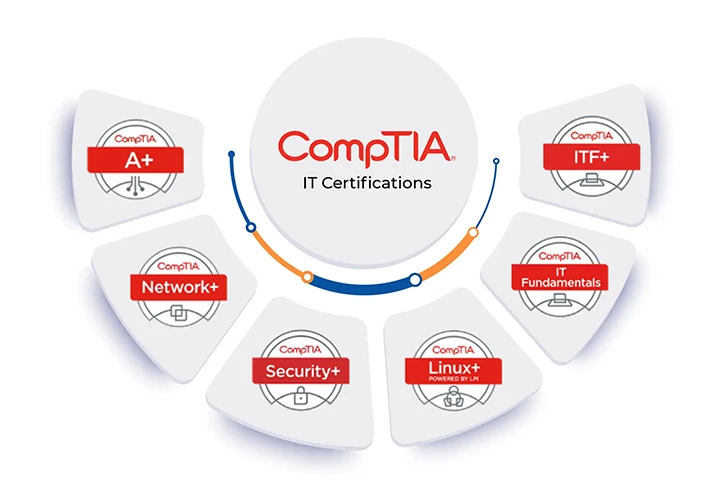
CompTIA (Computing Technology Industry Association) is a leading vendor-neutral certification body in the IT industry. Their certifications are globally recognized and highly valued by employers. Here’s a breakdown of everything you need to know about them:
Why Choose CompTIA Certifications?
- Vendor-Neutral: Unlike certifications tied to specific products (like Microsoft or Cisco), CompTIA focuses on foundational skills applicable across various technologies. This makes you a more versatile candidate.
- Industry-Recognized: Employers frequently list CompTIA certifications as requirements or preferred qualifications in job postings.
- Career Path Focused: CompTIA offers a structured pathway for career progression, starting with entry-level and moving towards more specialized roles.
- Hands-on Focus: CompTIA exams emphasize practical skills and real-world scenarios, not just theoretical knowledge.
- Affordable: Compared to some vendor-specific certifications, CompTIA certifications are generally more affordable.
- Regularly Updated: CompTIA updates its exams to reflect the latest technologies and industry trends.
The CompTIA Certification Pathway
CompTIA certifications are generally organized into a progression, though you don’t have to follow it strictly. Here’s the typical path:
1. A+ (Entry-Level)
- Focus: Covers the fundamentals of computer hardware, software, networking, and troubleshooting. It’s the industry standard for establishing a career in IT support.
- Who it’s for: Individuals seeking entry-level roles like Help Desk Technician, IT Support Specialist, Field Service Technician.
- Exams: Two exams are required:
- Core 1 (220-1101): Hardware, mobile devices, networking, and virtualization.
- Core 2 (220-1102): Operating systems, security, software troubleshooting, and operational procedures.
- Prerequisites: None officially, but CompTIA recommends 9-12 months of hands-on experience.
2. Network+ (Foundational Networking)
- Focus: Covers networking concepts, infrastructure, security, and troubleshooting. Builds on the A+ knowledge and prepares you for networking roles.
- Who it’s for: Individuals aiming for roles like Network Administrator, Network Technician, Network Support Specialist.
- Exam: N10-009
- Prerequisites: CompTIA A+ is recommended, but not required. CompTIA suggests 9-12 months of networking experience.
3. Security+ (Foundational Security)
- Focus: Covers core security principles, threats, vulnerabilities, and security technologies. A highly sought-after certification for cybersecurity roles. Often required for DoD 8570 compliance.
- Who it’s for: Individuals pursuing roles like Security Analyst, Security Administrator, Security Specialist.
- Exam: SY0-701
- Prerequisites: CompTIA Network+ is recommended, but not required. CompTIA suggests 9-12 months of security experience.
4. Cloud+ (Cloud Computing)
- Focus: Covers cloud technologies, deployment models, and management practices. Focuses on hybrid and multi-cloud environments.
- Who it’s for: Individuals working with or planning to work with cloud technologies, such as Cloud Engineer, Cloud Administrator, Cloud Developer.
- Exam: CLO-002
- Prerequisites: CompTIA Cloud+ is recommended, but not required. CompTIA suggests 1-2 years of experience in a cloud environment.
5. CySA+ (Cybersecurity Analyst)
- Focus: Focuses on behavioral analytics, threat detection, and incident response. More advanced than Security+.
- Who it’s for: Individuals in roles like Cybersecurity Analyst, Security Operations Center (SOC) Analyst.
- Exam: CS0-003
- Prerequisites: CompTIA Security+ is highly recommended.
6. CASP+ (Advanced Security Practitioner)
- Focus: Covers advanced security concepts, risk management, and enterprise security architecture. The highest level of CompTIA security certification.
- Who it’s for: Experienced security professionals in roles like Security Architect, Security Consultant.
- Exam: CAS-003
- Prerequisites: CompTIA Security+ and 5+ years of experience in IT administration with at least 3 years in security.
7. Linux+ (Linux Administration)
- Focus: Covers essential Linux administration skills, including system administration, networking, security, and troubleshooting.
- Who it’s for: System Administrators, DevOps Engineers, and anyone working with Linux servers.
- Exam: XK0-006
- Prerequisites: None officially, but some Linux experience is helpful.
8. Server+ (Server Administration)
- Focus: Covers server administration, including installation, configuration, maintenance, and troubleshooting.
- Who it’s for: System Administrators, IT Professionals responsible for server infrastructure.
- Exam: SK0-005
- Prerequisites: CompTIA A+ is recommended, but not required.
Resources for Studying
- CompTIA Official Website: https://www.comptia.org/ – The best source for exam objectives, study guides, and practice tests.
- Professor Messer: https://www.professormesser.com/ – Free video training courses for many CompTIA certifications.
- ExamCompass: https://www.examcompass.com/comptia/ – Free practice questions.
- CrucialExams: https://crucialexams.com/exams/comptia/practice-tests-questions-flashcards – Free practice questions.
Cost Breakdown (Approximate – as of late 2023/early 2024)
- Exam Vouchers: $238 – $338 per exam (prices vary)
- Study Materials: $50 – $300+ depending on the resources you choose (books, online courses, practice exams).
- Retake Vouchers: If you don’t pass the first time, you’ll need to purchase another voucher.
Tips for Success
- Understand the Exam Objectives: Download the official exam objectives from the CompTIA website and focus your studies accordingly.
- Hands-on Practice: Don’t just read about concepts; practice them in a lab environment. Virtual machines are a great way to do this.
- Practice Exams: Take plenty of practice exams to get familiar with the exam format and identify your weak areas.
- Time Management: Learn to manage your time effectively during the exam.
- Stay Updated: The IT landscape is constantly evolving, so stay up-to-date on the latest technologies and trends.
In conclusion
CompTIA certifications are a valuable investment for anyone looking to build a successful career in IT. By choosing the right certification for your career goals and dedicating yourself to studying, you can significantly increase your earning potential and open up new opportunities.
Do you have any specific CompTIA certification you’d like me to elaborate on? Or perhaps you’d like to know which certification is best for a particular career path? Just let me know!