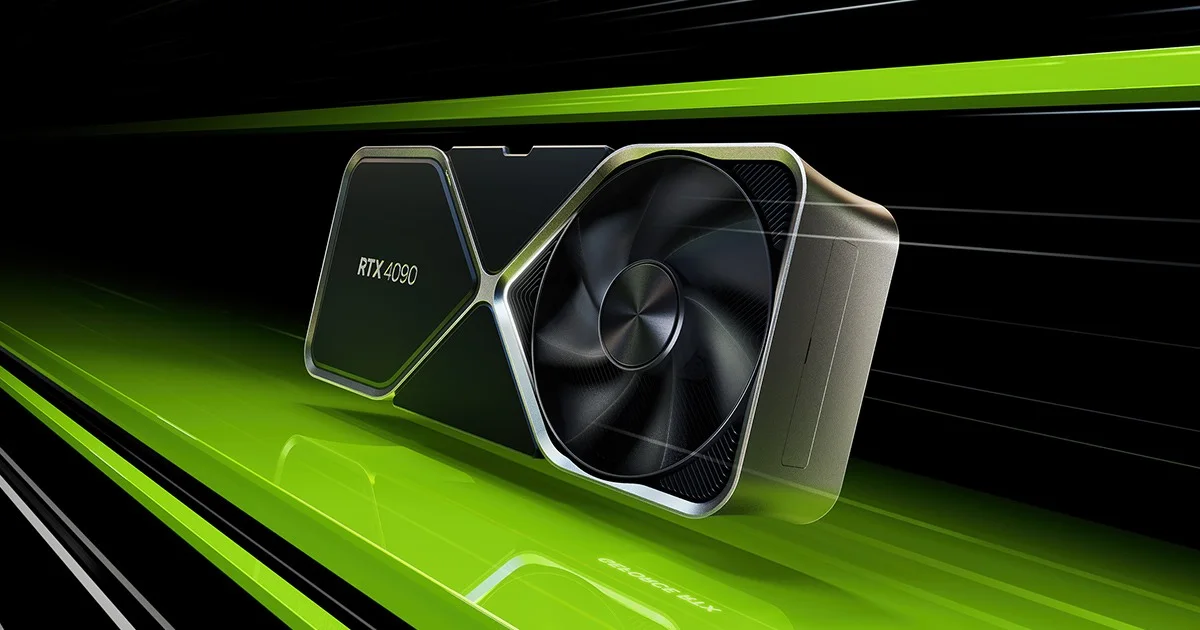
NVIDIA’s RTX brand represents the company’s high-end line of graphics cards (GPUs) that feature hardware-accelerated Ray Tracing and AI-driven capabilities.
Launched in 2018 with the GeForce RTX 20-series, it marked a massive shift in how computer graphics are rendered in real-time. Here is a breakdown of what makes RTX special.
1. The Core Technologies
The “RTX” moniker refers to three specific types of specialized hardware cores found inside the GPU silicon:
- RT Cores (Ray Tracing Cores): These are dedicated circuits designed specifically to calculate how light, shadows, and reflections behave in a 3D environment. Before RTX, these calculations had to be done by the general-purpose cores, which was incredibly slow.
- Tensor Cores: These are AI-specialized processors. They power NVIDIA’s “Deep Learning” features, most notably DLSS (Deep Learning Super Sampling).
- CUDA Cores: The “standard” processing units that handle traditional rendering tasks.
2. The “Killer App”: DLSS
If Ray Tracing is the “cool factor,” DLSS is the reason people buy RTX cards.
- How it works: The GPU renders a game at a lower resolution (e.g., 1080p), and the AI Tensor cores “upscale” the image to look like a much higher resolution (e.g., 4K).
- The benefit: You get the visual fidelity of 4K with the high frame rates (FPS) of 1080p, effectively giving you “free” performance boosts.
3. Key Generations
- RTX 20-Series (Turing): The “pioneer” series. Introduced real-time ray tracing and DLSS 1.0.
- RTX 30-Series (Ampere): The performance leap. This generation brought massive increases in traditional rasterization and improved ray tracing. (Note: These were in high demand during the 2020–2022 crypto/shortage boom).
- RTX 40-Series (Ada Lovelace): The current generation. Key features include Frame Generation (using AI to invent entire frames between real ones to double frame rates) and extreme power efficiency.
4. Why RTX is Used Beyond Gaming
While famous for gaming, RTX is the industry standard for professional creative work:
- 3D Rendering: Software like Blender, V-Ray, and Octane Render rely on RT cores to create photorealistic images in seconds rather than hours.
- AI Development: Because of the Tensor cores, NVIDIA RTX GPUs are the gold standard for running local AI models (like Stable Diffusion for image generation or LLMs like Llama).
- Video Editing/Streaming: NVIDIA’s NVENC encoder is widely considered the best in the business for high-quality streaming and fast video exports.
5. RTX vs. GTX
You may still see older “GTX” cards (like the GTX 1660).
- GTX cards lack RT and Tensor cores. They can play games, but they cannot perform hardware-accelerated ray tracing or use AI features like DLSS.
- RTX is the modern successor and is required for all of NVIDIA’s latest software innovations.
Should you buy one?
- Yes, if: You want to play modern AAA games with high graphics, you do video editing or 3D design, or you are interested in experimenting with local AI/machine learning.
- No, if: You only play lightweight games (like League of Legends or Minecraft without shaders), you are on a very strict budget (where AMD’s Radeon cards often offer better “raw” performance for the price), or you are just doing basic office work.
Do you have a specific RTX model in mind, or are you trying to choose one for a build? I can help compare them.