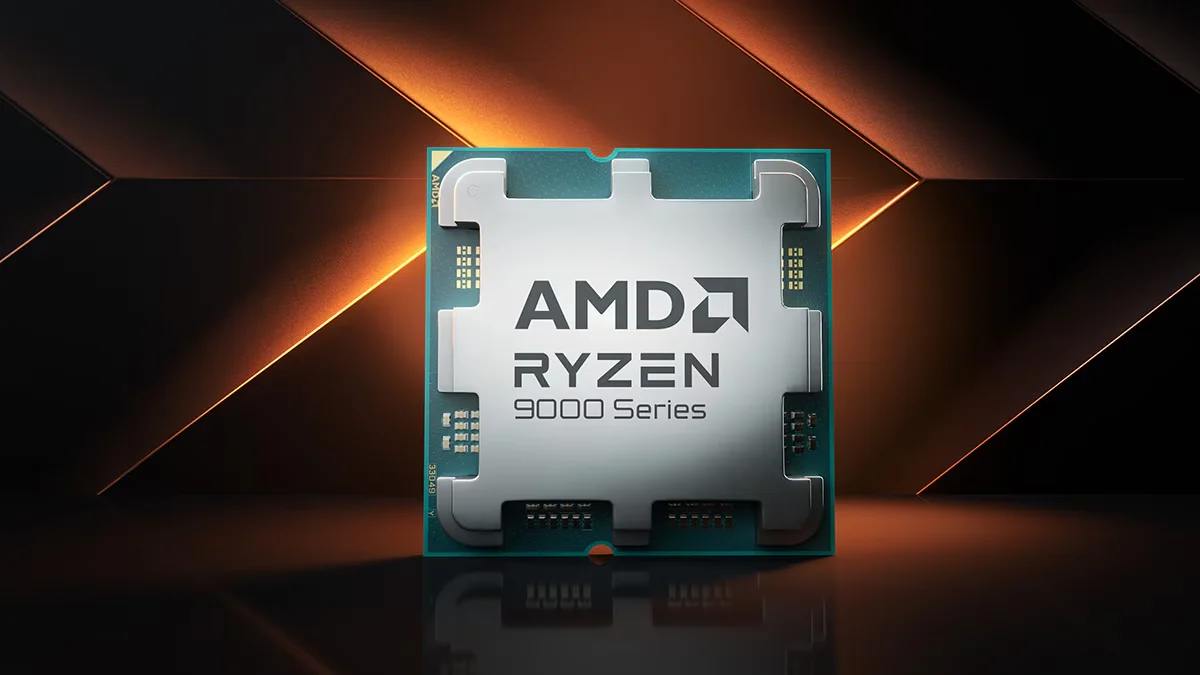
AMD’s Ryzen is a brand of multi-core x86-64 microprocessors developed by AMD (Advanced Micro Devices). Since its launch in 2017, Ryzen has been credited with revitalizing AMD and forcing the entire CPU industry to innovate, effectively ending the period of stagnation in processor performance.
Here is a breakdown of what you need to know about Ryzen:
1. The Impact of Ryzen
Before 2017, AMD was struggling significantly against Intel. When Ryzen launched, it introduced the “Zen” architecture, which offered a massive leap in performance-per-watt and core counts for a fraction of the cost of Intel’s offerings. This forced Intel to move from quad-core standards to higher core counts for mainstream desktop users.
2. The Naming Convention
Ryzen processors are categorized by performance tiers, similar to Intel’s Core i3/i5/i7/i9 structure:
- Ryzen 3: Entry-level (Budget-focused, usually 4 cores).
- Ryzen 5: Mid-range (Best for gaming and general productivity; 6 cores).
- Ryzen 7: High-end (Great for heavy gaming and content creation; 8 cores).
- Ryzen 9: Enthusiast-grade (Heavy multi-tasking, video editing, 3D rendering; 12–16 cores).
- Ryzen Threadripper: Ultra-high-end workstation processors (32 to 96+ cores).
3. Key Technology Terms
- Zen Architecture: The underlying design of the chip. We are currently on Zen 5 (Ryzen 9000 series).
- AM4 vs. AM5:
- AM4: The long-lived socket for Ryzen 1000 through 5000 series. It uses DDR4 RAM. It is famous for its longevity.
- AM5: The modern socket (introduced with the 7000 series) that supports DDR5 RAM and PCIe 5.0. It is expected to be supported for many years to come.
- “X” vs. “G” vs. “X3D”:
- X: Higher clock speeds.
- G: Includes integrated graphics (APU) – perfect for budget PCs without a dedicated GPU.
- X3D: Features 3D V-Cache technology, which adds a massive layer of L3 cache directly onto the chip. This makes them widely considered the best gaming CPUs in the world.
4. Why people choose Ryzen today
- Gaming Performance: The “X3D” models (like the 7800X3D) are consistently at the top of gaming benchmarks.
- Efficiency: Generally, modern Ryzen chips produce less heat and consume less power than Intel’s high-end alternatives.
- Upgrade Path: AMD is famous for sticking to a CPU socket for a long time (like the AM4 platform), meaning you can upgrade your CPU years later without buying a new motherboard.
- Multi-core Performance: Even in lower-tier chips, AMD often provides more cores for the price than the competition.
5. Current Generation (As of mid-2024)
- Ryzen 9000 Series (Zen 5): The newest desktop chips, focusing on efficiency and IPC (Instructions Per Clock) improvements.
- Ryzen 8000G Series: The latest APUs (processors with very strong integrated graphics).
- Ryzen 7000 Series (Zen 4): Still highly relevant, powerful, and often available at a better price point than the newest series.
Which one should you buy?
- For pure gaming: Look for an X3D model (e.g., Ryzen 7 7800X3D).
- For a balanced gaming/work PC: Ryzen 5 or 7 (7600X or 7700X).
- For productivity/editing: Ryzen 9 (7950X or 9950X).
- For a budget build: Consider a Ryzen 5000 series chip on an AM4 motherboard—it is incredibly cheap and still very capable for modern gaming.
Are you looking to build a PC, or are you just curious about the technology? I can help you pick a specific model if you tell me your budget and what you plan to use the computer for.