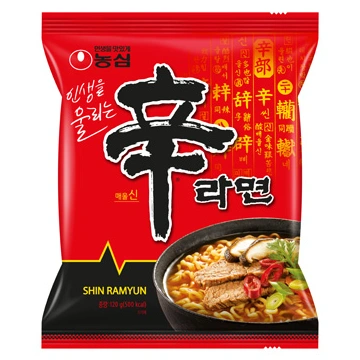
Shin Ramyun(신라면) is arguably the most famous and iconic brand of instant noodles to come out of South Korea, produced by the company Nongshim. Since its introduction in 1986, it has become a global phenomenon, beloved for its distinctive flavor profile.
Here’s a breakdown of what makes Shin Ramyun so popular:
1. Flavor Profile
- Spicy and Savory: It’s known for its bold, spicy beef (or mushroom, depending on the base interpretation) broth, infused with red chili peppers and various spices. It offers a deep, umami-rich flavor that is incredibly satisfying.
- Heat Level: While generally considered moderately spicy for many, its kick is noticeable and can be quite intense for those not accustomed to spicy foods.
- Distinctive Aroma: The aroma of the chili and savory broth is highly recognizable and inviting.
2. Noodles
- The noodles themselves are thick, chewy, and substantial, providing a good texture that holds up well in the spicy broth. They have a good “bite.”
3. Contents of the Packet
- Noodle Block: The dried instant noodles.
- Soup Base Powder: The heart of the flavor, containing chili, salt, MSG, and other spices.
- Vegetable Mix: A small packet of dehydrated vegetables, typically including shiitake mushrooms, green onions, carrots, and chili flakes, which add texture and a touch of freshness.
4. Meaning of “Shin”
- While “Shin” (辛) literally means “spicy” or “hot” in Chinese characters (used in Korean), it’s also a clever nod to the founder of Nongshim, Shin Choon-ho.
5. Popularity and Global Reach
- Shin Ramyun holds a dominant market share in South Korea and is exported to over 100 countries worldwide. It’s a staple in Asian grocery stores and has found its way into mainstream supermarkets globally.
- It’s often cited as one of the best-selling instant noodle brands in the world.
6. Preparation and Customization
- Basic Preparation: Typically, you boil about 550ml (around 2.5 cups) of water, add the noodles, soup base, and vegetable mix, and cook for 4-5 minutes.
- Common Additions: One of the reasons for its enduring popularity is how easily it can be customized. Popular additions include:
- Egg: Poached, fried, or whisked directly into the broth.
- Kimchi: To add extra tang and spice.
- Green Onions: For freshness and a slight oniony bite.
- Cheese Slice: A slice of American or cheddar cheese melting into the hot broth is a surprisingly delicious and common addition, adding creaminess and tempering the spice.
- Tofu: Soft or firm tofu cubes.
- Leftover Meat: Thinly sliced pork belly, beef, or chicken.
- More Vegetables: Mushrooms, bok choy, bean sprouts, etc.
- Gochujang/Gochugaru: For an extra kick of Korean chili.
7. Variations
- Shin Ramyun Black: A premium version introduced in 2011, featuring a richer, more complex broth (often described as a bone broth base with garlic and beef), an additional soup powder packet, and often more substantial dried vegetables. It’s generally considered less spicy than the original but deeper in flavor.
- Shin Ramyun Light: A version with reduced sodium and calories.
- Shin Ramyun Stir-fry: A non-soupy version designed to be drained and mixed with a sauce.
- Cup Noodles: Convenient ready-to-eat versions in various sizes.
In essence, Shin Ramyun is more than just instant noodles; it’s a cultural phenomenon, a go-to comfort food, and a staple in pantries worldwide, appreciated for its consistent quality, satisfying heat, and incredible versatility.