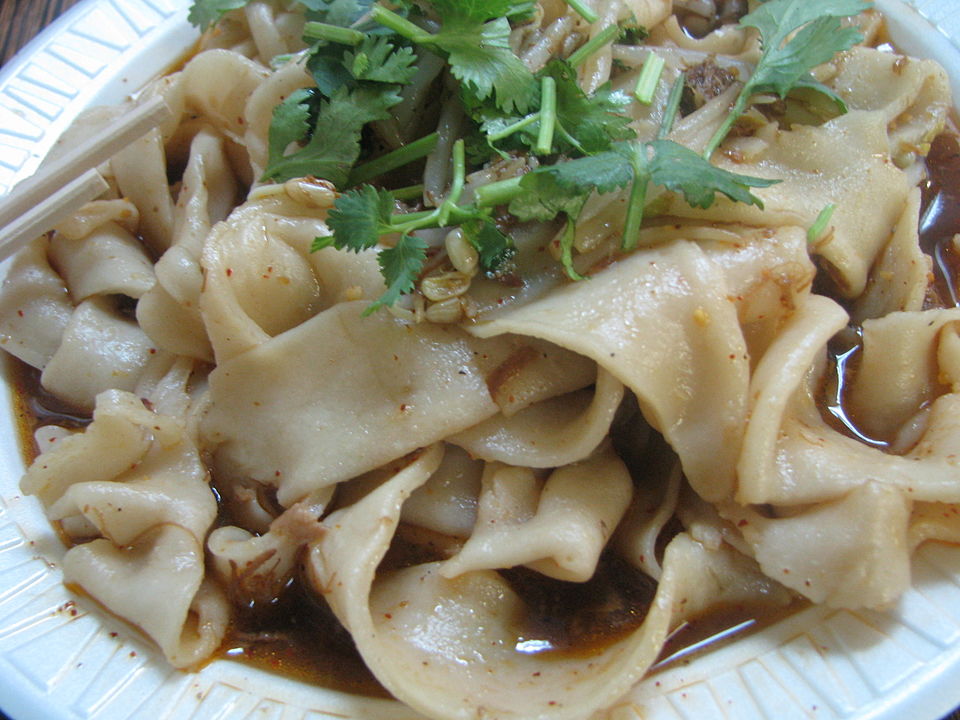
1. The Noodles Themselves
- Thickness & Texture: Biang Biang noodles are wide – typically 2-3 centimeters (almost an inch!) – and flat. They have a wonderfully chewy, slightly rough texture. This texture comes from the vigorous pulling and slapping of the dough.
- Hand-Pulled Process: Making Biang Biang noodles is a performance art! It’s a labor-intensive process requiring skill and strength. The dough is repeatedly stretched, folded, and slapped against the counter, gradually lengthening and widening it into the characteristic broad strands. This process develops gluten, giving the noodles their chewiness.
- The “Biang” Character: This is arguably the most famous aspect. The character “biang” (U+30EDE, see below.) is incredibly complex, consisting of 57 or 58 strokes (depending on how you count!). It’s one of the most complicated Chinese characters, and its origin is debated. It’s believed to represent the sound of the noodles slapping against the counter during the making process. Because of its complexity, it’s rarely used outside of referencing this noodle dish. Many computers don’t even support it!
- Dough Composition: The dough is typically made from wheat flour, water, and salt. Some recipes include a small amount of alkali (kansui) to give the noodles a more elastic texture.
The “Biang” Character
𰻞
2. The Flavor Profile & Ingredients
- Spicy & Savory: Biang Biang noodles are known for their bold, spicy, and savory flavors.
- Key Components:
- Chili Oil (You Po): The “yóu pō” in the Mandarin name refers to the hot oil that’s poured over the noodles. This is a crucial element, often infused with chili flakes, garlic, and other spices.
- Vinegar: Black vinegar is commonly used, adding a tangy depth.
- Soy Sauce: Provides umami and saltiness.
- Garlic: Lots of it! Often minced and fried.
- Scallions (Green Onions): A generous amount, both for flavor and garnish.
- Bean Sprouts: Add a refreshing crunch.
- Sometimes: Ground pork or beef, spinach, or other vegetables are added.
- Regional Variations: While the core elements remain consistent, there are regional variations in Shaanxi province and beyond. Some versions are more heavily spiced, while others emphasize the vinegar’s tang.
3. History & Origins
- Shaanxi Province: Biang Biang noodles originated in the Guan Zhong region of Shaanxi province, specifically around the city of Xi’an.
- Folklore & Legends: There are several stories surrounding the origin of the noodles and the “biang” character. One popular tale involves a poor scholar who was inspired by the sound of his wife making noodles to create the character and the dish.
- Street Food Staple: Traditionally, Biang Biang noodles were a popular street food, sold by vendors from small stalls.
- Recent Popularity: The dish gained significant popularity in the 2010s, fueled by social media and food blogs. Restaurants specializing in Biang Biang noodles began opening in major cities across China and internationally.
4. Where to Find Them
- Shaanxi Province (China): The best place to experience authentic Biang Biang noodles is in Shaanxi province, particularly in Xi’an.
- Major Chinese Cities: You can find Biang Biang noodle restaurants in cities like Beijing, Shanghai, and Guangzhou.
- International Cities: The dish is becoming increasingly popular in cities with large Chinese communities, such as New York, Los Angeles, London, and Sydney. Look for restaurants specializing in Shaanxi cuisine.
- DIY (Making at Home): While challenging, it’s possible to make Biang Biang noodles at home. You’ll need to be prepared for a workout! There are many tutorials available online.
5. Why are they so special?
- The Experience: Watching the noodles being made is part of the appeal. The skill and energy of the noodle puller are captivating.
- The Flavor Combination: The spicy, savory, tangy, and crunchy elements create a complex and satisfying flavor profile.
- The Cultural Significance: The “biang” character and the folklore surrounding the dish add to its cultural significance.
- The Texture: That wonderfully chewy, wide noodle is unlike anything else.
Resources to Explore
- Eater – How to Make Biang Biang Hand-Ripped Noodles at Home: https://www.eater.com/24343649/how-to-make-hand-ripped-noodles-at-home
- YouTube – How Biang Biang Noodles are Made: (Search for “Biang Biang Noodles making” on YouTube to find numerous videos demonstrating the process)
Biang Biang noodles are more than just a dish; they’re a cultural experience. If you have the opportunity to try them, don’t miss it!