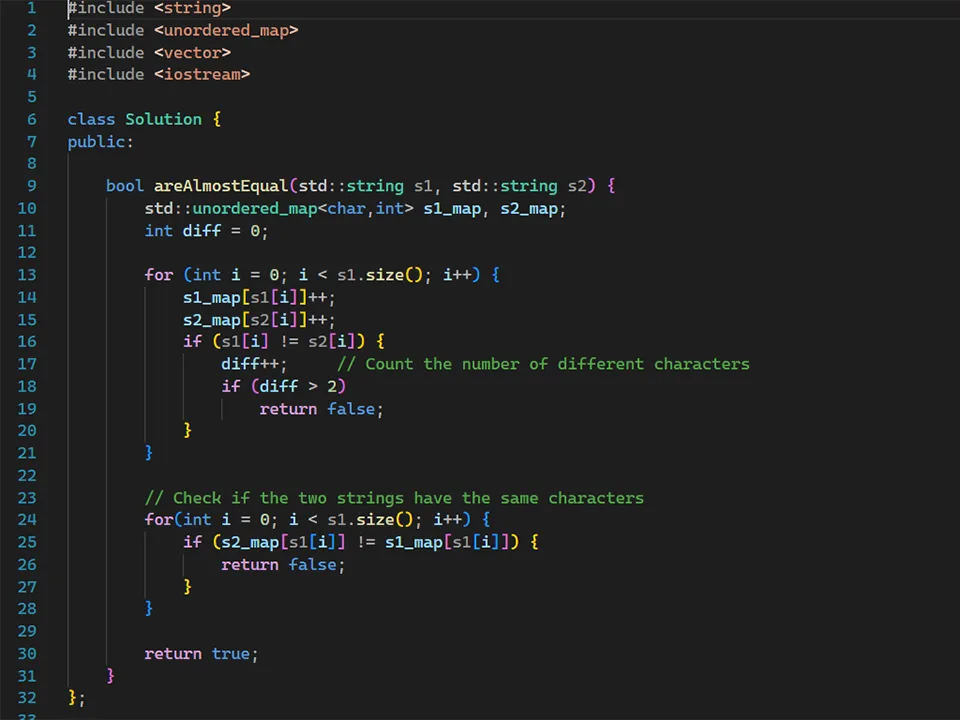
C++ is a powerful and versatile programming language. It’s a cornerstone of modern computing, used in everything from operating systems and game development to high-frequency trading and embedded systems. Here’s a breakdown covering its history, key features, uses, strengths, weaknesses, and learning resources:
1. History & Evolution
- Origins (1979-1983): Developed by Bjarne Stroustrup at Bell Labs as “C with Classes.” It aimed to add object-oriented features to the efficient C language.
- Early Standardization (1998): The first official ISO standard, C++98, solidified the language.
- Continued Evolution: C++ has undergone significant revisions with standards released roughly every 3-5 years:
- C++03: Minor corrections and clarifications.
- C++11: A major update introducing features like lambda expressions, range-based for loops, move semantics, and smart pointers. Considered a turning point for modern C++.
- C++14: Smaller improvements building on C++11.
- C++17: Further enhancements, including structured bindings, inline variables, and
std::optional. - C++20: Significant additions like concepts, coroutines, ranges, and modules.
- C++23: The latest standard, adding more features and refinements.
2. Key Features
- Multi-Paradigm: C++ supports multiple programming paradigms:
- Procedural: Like C, you can write code in a step-by-step manner.
- Object-Oriented (OOP): Classes, objects, inheritance, polymorphism, encapsulation. This is a core strength.
- Generic Programming: Templates allow you to write code that works with different data types without being rewritten.
- Functional Programming: Features like lambda expressions and function objects support functional styles.
- Static Typing: Data types are checked at compile time, helping catch errors early.
- Compiled Language: C++ code is compiled into machine code, resulting in fast execution speeds.
- Low-Level Control: Provides direct access to memory and hardware, making it suitable for system programming.
- High Performance: Optimized for speed and efficiency.
- Rich Standard Library (STL): Provides a vast collection of pre-built data structures (vectors, lists, maps, etc.) and algorithms.
- Memory Management: Offers both manual memory management (using
newanddelete) and smart pointers (to automate memory management and prevent leaks). - Operator Overloading: Allows you to redefine the meaning of operators for user-defined types.
- Templates: Enable generic programming, creating reusable code that works with various data types.
- Exceptions: A mechanism for handling errors and exceptional situations.
3. Common Uses
- Operating Systems: Parts of Windows, macOS, and Linux are written in C++.
- Game Development: A dominant language in the gaming industry (Unreal Engine, Unity).
- Game Engines: Creating the core infrastructure for games.
- High-Performance Computing (HPC): Scientific simulations, financial modeling.
- Embedded Systems: Programming microcontrollers and devices (cars, appliances, medical equipment).
- Databases: MySQL, MongoDB, and other databases use C++ for performance-critical components.
- Web Browsers: Parts of Chrome, Firefox, and Safari are written in C++.
- Financial Modeling: High-frequency trading systems, risk management.
- Machine Learning/AI: Frameworks like TensorFlow and PyTorch have C++ backends for performance.
- System Software: Device drivers, compilers, and other low-level tools.
4. Strengths
- Performance: Generally faster than interpreted languages like Python or JavaScript.
- Control: Fine-grained control over hardware and memory.
- Scalability: Suitable for large and complex projects.
- Mature Ecosystem: A large community, extensive libraries, and numerous tools.
- Portability: Can be compiled for various platforms.
- Object-Oriented Capabilities: Promotes code reusability and maintainability.
- Standardization: ISO standards ensure consistency and compatibility.
5. Weaknesses
- Complexity: Can be challenging to learn and master due to its many features and nuances.
- Manual Memory Management: Requires careful attention to avoid memory leaks and dangling pointers (though smart pointers mitigate this).
- Steep Learning Curve: More difficult to pick up than some other languages.
- Compilation Time: Can be slow for large projects.
- Debugging: Debugging can be more difficult than in some other languages.
6. Example (Hello, World!)
#include <iostream>

int main() {
  std::cout << "Hello, World!" << std::endl;
  return 0;
}
Explanation
#include <iostream>: Includes the iostream library, which provides input/output functionality.int main(): The main function, where program execution begins.std::cout << "Hello, World!" << std::endl;: Prints “Hello, World!” to the console.std::cout: The standard output stream.<<: The insertion operator, used to send data to the output stream.std::endl: Inserts a newline character and flushes the output stream.
return 0;: Indicates that the program executed successfully.
7. Learning Resources
- Online Courses:
- Coursera: Offers courses from universities like UC Santa Cruz and University of Pennsylvania.
- Udemy: Numerous C++ courses for all levels.
- Codecademy: Interactive C++ course.
- edX: Courses from Harvard and other institutions.
- Websites:
- cppreference.com: A comprehensive reference for the C++ standard library.
- cplusplus.com: Tutorials, documentation, and examples.
- Learncpp.com: A well-structured tutorial for beginners.
- Books:
- “Programming: Principles and Practice Using C++” by Bjarne Stroustrup: A comprehensive introduction by the creator of C++.
- “C++ Primer” by Stanley B. Lippman, Josée Lajoie, and Barbara E. Moo: A detailed and thorough guide.
- “Effective C++” by Scott Meyers: Focuses on best practices and common pitfalls.
- Integrated Development Environments (IDEs):
- Visual Studio (Windows): A powerful and feature-rich IDE.
- CLion (Cross-Platform): A dedicated C++ IDE from JetBrains.
- Xcode (macOS): Apple’s IDE for macOS and iOS development.
- Code::Blocks (Cross-Platform): A free and open-source IDE.
- VS Code (Cross-Platform): A lightweight and versatile code editor with C++ extensions.
In conclusion
C++ is a complex but incredibly powerful language. While it has a steeper learning curve than some other languages, the benefits in terms of performance, control, and scalability make it a valuable skill for many software development domains. The continuous evolution of the language with new standards ensures its relevance in the ever-changing world of technology.